
Legacy platform modernization
Legacy modernization is rarely a technology problem in disguise. The mainframe still runs because somebody, decades ago, encoded business logic into it that nobody fully wrote down. The monolith persists because every attempt to break it has stalled at the integration test. The system everyone wants replaced is also the system the business runs on. Treating it as purely an engineering exercise is how programs end up shelved at the eighteen-month review.
We approach modernization the way you would approach a renovation of a building you cannot empty. Strangler-fig migration: new code replaces old in slices, behind the same façade, while production keeps running. Investment goes first into the parts the business actually needs to evolve - pricing logic, customer-facing flows, regulatory reporting - not into a clean-room rewrite that will never converge. Live traffic, no freeze, no big-bang cutover.
AI helps where it earns its place: code translation that gives engineers a starting point instead of a blank file, test generation against the legacy system, reverse-engineering of undocumented behaviors. None of it replaces architectural judgment, and none of it should be allowed to. The hard work is still figuring out which slice to take next, what the business can absorb, and how to keep the team that built the original system on the program rather than ahead of it. We work that problem alongside the people who lived it.
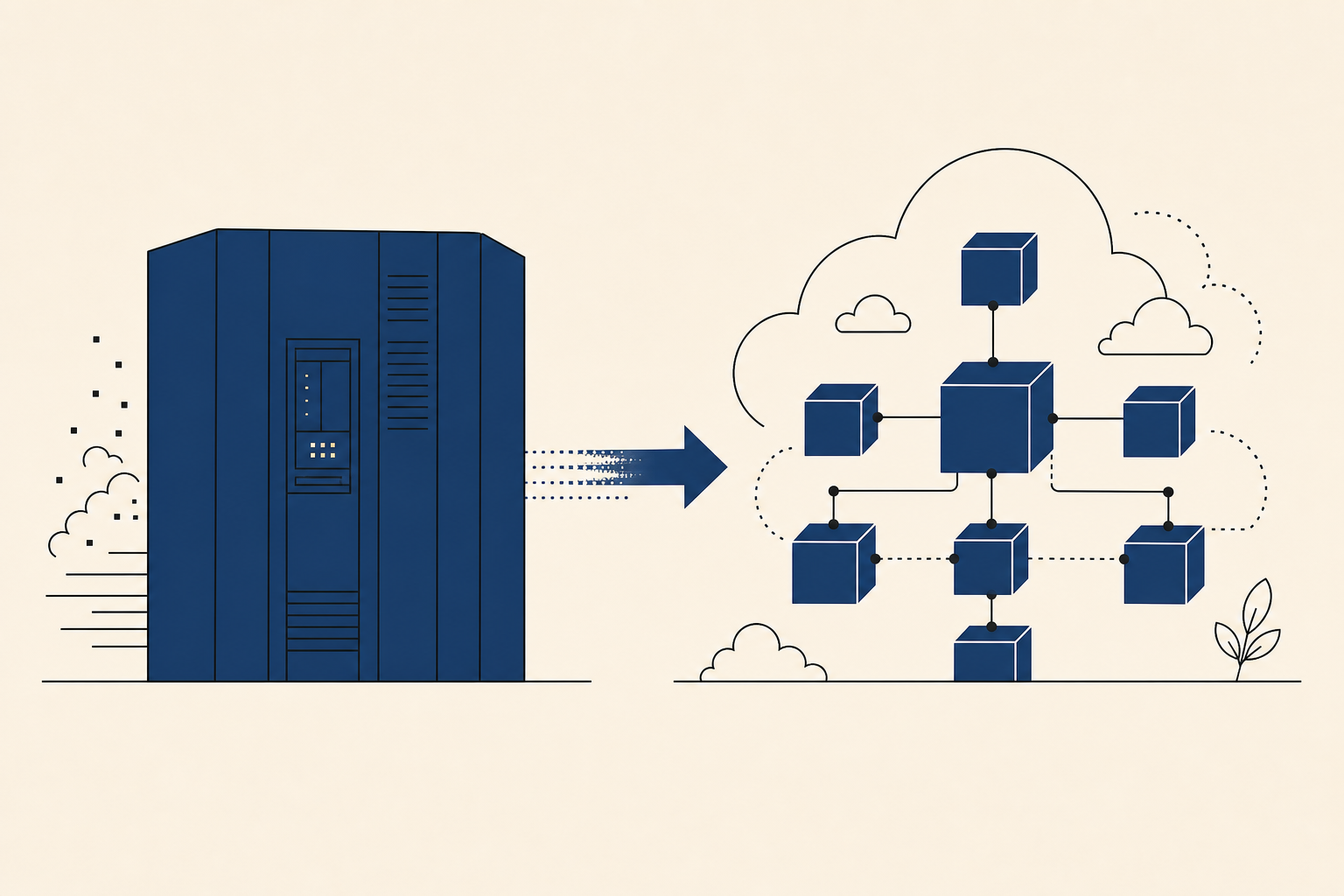
Three ways this shows up in production.
Strangler-fig migration
New replaces old in slices, behind the same façade. No big-bang.
Live traffic, no freeze
Production keeps running while the migration progresses.
AI where it earns its place
Code translation, test generation, doc reverse-engineering - used surgically.