
Enterprise-wide multi-agent automation
The market is full of "AI assistants" that summarize email and draft documents. The interesting work - and the work that actually moves a P&L - is automating end-to-end business processes: agents that read inbound documents, decide what to do, call the systems of record, and close the loop. This is closer to a distributed system than to a chatbot, and it requires the same engineering rigor.
The shift is structural. Quoting, dispatch, intake, reconciliation, ticket triage, renewal motions - these are workflows, not conversations. They span CRM, ERP, ticketing, and a long tail of legacy systems. Done well, they free your most experienced operators from repetitive coordination work and let them focus on the cases that actually need judgment. Done badly, they create a new layer of opaque automation that your auditors and operators will spend the next year unwinding.
The organizational work is at least as important as the engineering. Multi-agent systems need clear ownership: who approves which decisions, what's reversible, what's logged, who gets paged when something looks wrong. We build that governance into the system from PR #1 - signed audit on every state change, human-in-the-loop where the cost of being wrong is high, and a runbook your operators help write.
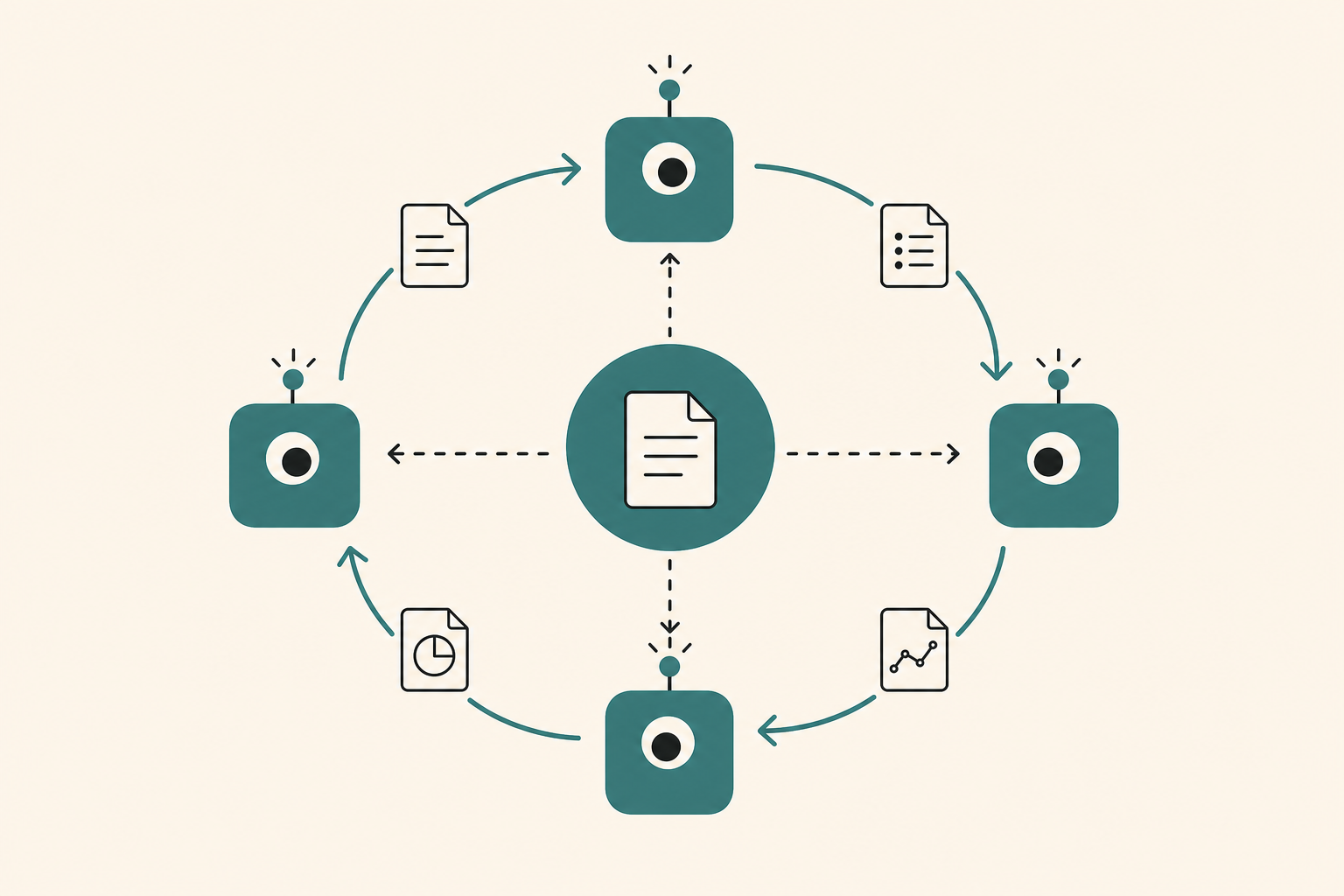
Three ways this shows up in production.
Front-office and revenue ops
Lead qualification, proposal generation, account research, and renewal motions - agents that move deals forward, not just summarize them.
Operations and customer ops
Order intake, dispatch, ticket triage, exception handling - multi-step agents that file, escalate, and close.
Back-office and finance
Document parsing, reconciliation, invoice and contract workflows - with signed audit on every state change.